
Grey and olive RAL shades for sheds and outbuildings
Six quiet greys and greens that sit well in a garden, how foliage, brick and sky shift them, and how to test a shed colour before you paint it.
 By Petra Lindahl8 minute read
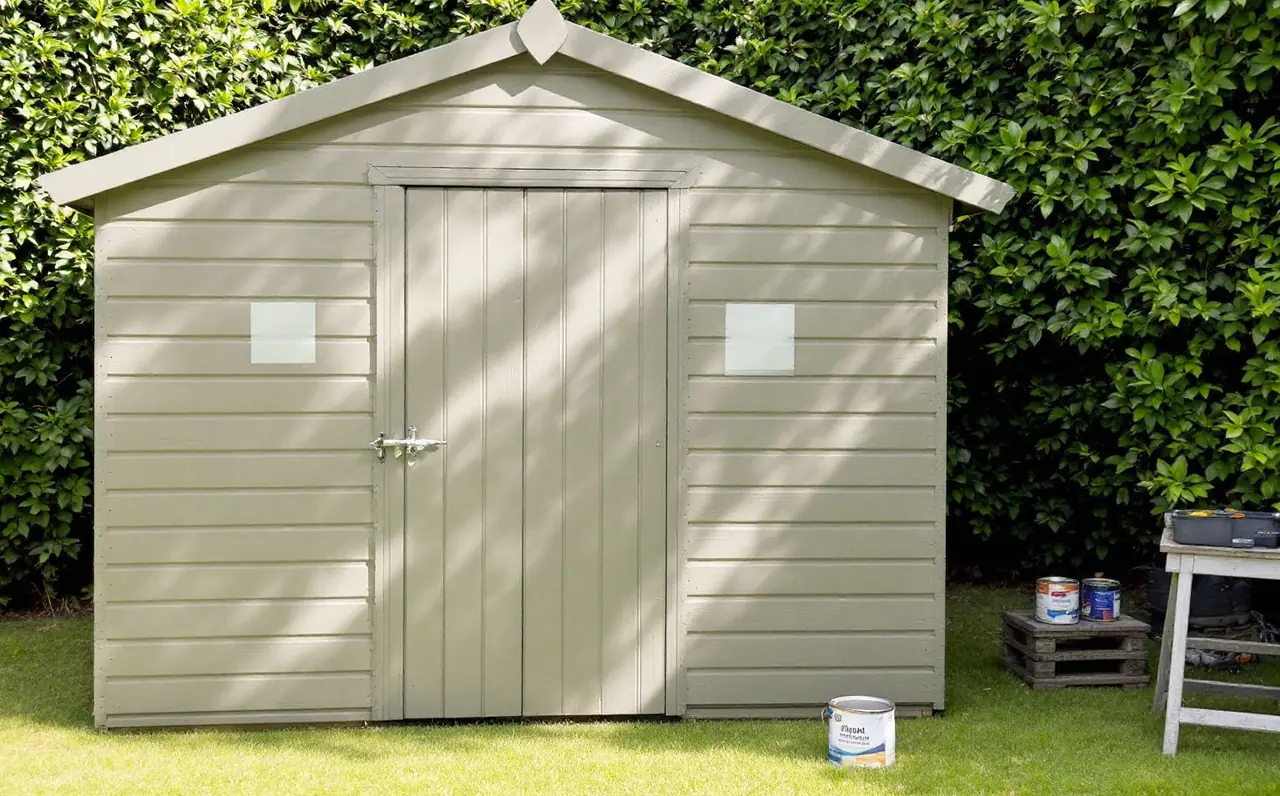
A shed is a strange thing to choose a colour for. It is a building, so it wants to look settled and solid, but it lives among plants, so anything too crisp or too bright makes it look like it was dropped there from above. The colours that work best on sheds, workshops, log stores and bike stores are usually the quiet ones: greys with a little warmth or green in them, and greens with a lot of grey. RAL Classic has a good handful of these, and because the numbers are fixed you can order the same shade for a shed, a fence and a metal bin store years apart.
This piece looks at six of them, at why they never look the same twice in a garden, and at the practical side of getting an opaque RAL colour onto timber or metal.
Six shades worth a test patch
Here is the short list I keep coming back to, with the mood each gives and what it tends to sit well beside. Treat these as starting points for your own test, not as rules.
| Shade | Mood | Pairs well with |
|---|---|---|
| RAL 7037 dusty grey | Soft, neutral, slightly warm | Gravel, silver birch, white or cream flowers, pale paving |
| RAL 6006 grey olive | Dark, quiet, almost brown-green | Hedges, dark foliage, red brick, black metal |
| RAL 7033 cement grey | Grey with a clear green cast | Lawns, box, ferns, natural timber trellis |
| RAL 6003 olive green | Earthy, military, deeper green | Yellow brick, grasses, copper and rust tones |
| RAL 7030 stone grey | Light, warm, calm | Stone walls, pale render, lavender, terracotta pots |
| RAL 6011 reseda green | Soft mid green, a little old-fashioned | Cottage planting, cream window frames, brick paths |
RAL 7037 dusty grey
RAL 7037 dusty grey is a mid grey that leans neither blue nor strongly green. That neutrality is its strength: it lets the planting carry the colour, and it does not look cold in winter the way a bluer grey can. On a screen its hex approximation looks flatter and duller than a painted shed in daylight, so judge it outside.
RAL 6006 grey olive
RAL 6006 grey olive is dark enough that people sometimes mistake it for a brown or a very dark grey. In shade it almost disappears into a hedge, which is exactly what you want for a large shed you would rather not notice. In low sun the green comes forward. It is one of the best choices for a building at the end of a small garden, because dark colours make things seem further away.
RAL 7033 cement grey
RAL 7033 cement grey is a grey that has quite a lot of green in it, more than its name suggests. Next to grass it reads as a soft grey-green; next to concrete it reads as grey. It is a good bridge colour when the shed sits between a lawn and a hard patio.
RAL 6003 olive green
A deeper, more saturated green than grey olive, with a yellow-brown undertone. It is the most assertive of the six, and it suits gardens with grasses, yellow brick or warm timber. On a big flat wall it can look stronger than the chip, so test it large.
RAL 7030 stone grey
A light warm grey, almost a stone or putty colour. It is the one I would choose for a small shed that should look light and tidy rather than hidden, or for a garden office where the inside of the door frame is visible all day.
RAL 6011 reseda green
A soft mid green with grey in it. It has a slightly vintage feel that suits cottage gardens and older houses. It shows its green clearly, so it is less of a camouflage colour than grey olive.
Why the same colour never looks the same in a garden
Indoors, a colour sits under one or two light sources and against white or pale walls. Outdoors it is surrounded by moving, coloured light, and greys and greens are the most easily pushed around.
Foliage
Light bouncing off leaves is green. A grey shed tucked under a tree or against a hedge picks up some of that light, so a neutral grey can look greenish and a green can look more intensely green. If the shed is screened by planting, choose a grey a touch more neutral than you think you need.
Brick and paving
Red or orange brick throws warm light onto anything near it and also changes how the eye reads the colour by contrast. Next to red brick a green looks greener, because red and green sit opposite each other. A warm grey next to brick can look cooler than it really is.
Sky
On a bright overcast day the light is cool and even, and greys look bluer and flatter. In evening sun they warm up. A north-facing wall sees mostly cool sky light, while a south-facing wall gets direct sun for much of the day, which is why two sides of the same shed can look like two slightly different colours.
Timber cladding: opaque paint, not stain
Most garden sheds are timber, and here the type of product matters more than the colour name. Exterior wood products fall roughly into two groups.
Opaque wood paints and opaque exterior wood finishes hide the grain under a solid film of colour. Many ranges can be tinted to RAL numbers, and this is the type to use if you want a RAL colour on timber. The texture of the wood still shows through, so a rough-sawn board will look slightly darker and softer than the same paint on smooth metal, but the colour itself is solid.
Stains, oils and semi-transparent treatments work differently. They let the grain and the colour of the timber show through, so the result depends on the wood underneath as much as on the tin. A stain cannot reproduce an opaque RAL colour, whatever the label suggests. If a stain is described as "grey" or "olive", treat that as a description of a mood, not a RAL number.
A few practical points for timber:
- Treated timber from new can need time to dry out before it will take paint well; follow the paint maker's advice.
- Rough-sawn boards absorb more paint than the coverage figure on the tin suggests, so plan for that.
- Paint the ends and edges of boards, and the gaps between overlapping cladding, where water sits.
Metal sheds
Metal sheds are usually made of steel sheet with a factory coating, sometimes galvanised under the paint. The factory colours tend to be a short list, often greens, greys and a beige. If you want a different RAL colour on an existing metal shed, the usual route is a clean, a light scuff of the factory coating, spot priming any bare or rusty patches with a primer suited to the metal (galvanised steel needs one made for zinc), and two coats of exterior metal paint tinted to the number. Metal panels heat up in the sun more than timber, and darker colours absorb more heat, so a dark shade on a metal shed will make the inside warmer in summer.
Test on two sides of the building
The most useful thing you can do before committing is paint test patches directly on the shed, on two sides.
Choose a wall that gets direct sun and one that is mostly in shade. Paint a patch on each, at least 50 cm square and ideally larger, in every colour on your shortlist. Two coats, so the old colour does not grin through. Then look at them across a few days, at different times, from where you normally see the shed: the kitchen window, the back door, the far end of the garden.
You will almost always find that one colour looks right on the shady side and another on the sunny side. Pick the one that looks acceptable on both, not the one that looks best on one wall.
Worked example: painting an 8 by 6 shed
Take a common apex shed of about 2.4 m by 1.8 m in rough-sawn overlap cladding, with walls about 1.8 m high to the eaves. It sits at the end of a lawn, backed by a beech hedge, with a red brick wall on one side.
The rough wall area is the perimeter times the height: (2.4 + 1.8) × 2 = 8.4 m, times 1.8 m, which is about 15 square metres. Add the two triangular gables, perhaps 0.5 square metres each, and you have about 16 square metres. Subtract nothing for the door and window; the frames and edges use up the difference.
Two coats means about 32 square metres of painting. If the tin quotes 8 square metres per litre on planed timber, the arithmetic says 4 litres, but rough-sawn overlap will take more, so I would plan for 5 litres and ask for it all in one batch so the colour stays consistent.
For the colour, I would test RAL 6006 grey olive, RAL 7033 cement grey and RAL 7037 dusty grey on the brick-facing side and on the side facing the lawn. The beech hedge will push all three greener, and the brick wall will make the grey olive look greener still. If the aim is for the shed to sink into the hedge, grey olive is likely to win. If the owner wants the shed to look light and tidy against the green, dusty grey is the safer pick.
If the same garden also has a garage door to colour, the reasoning in choosing a garage door colour applies: decide whether the outbuildings should match the house or deliberately step back from it, and keep the colours related.
A few last checks before ordering
The RAL number is the part to quote, but it is not the whole order. Check that the product is opaque, exterior and suitable for the surface: timber, galvanised steel or plain steel. Check the sheen, because a satin finish on a shed looks quite different from a matt one in the same colour, and matt tends to look more natural in a garden. And remember that the colours on this site, hex values included, are screen approximations; the test patches on the shed itself are the reference that counts.
Petra Lindahl
Petra covers colour indoors and in the garden, and the practical side of matching a RAL number in paint you can actually buy. She lives near Gothenburg in a house with too many shades of grey.
More from the same drawer

Why RAL colour names change between languages and shops
RAL numbers stay fixed while the names get translated, shortened and reused by shops. Why the four digits are what to quote, plus a checklist for ordering.
Read the note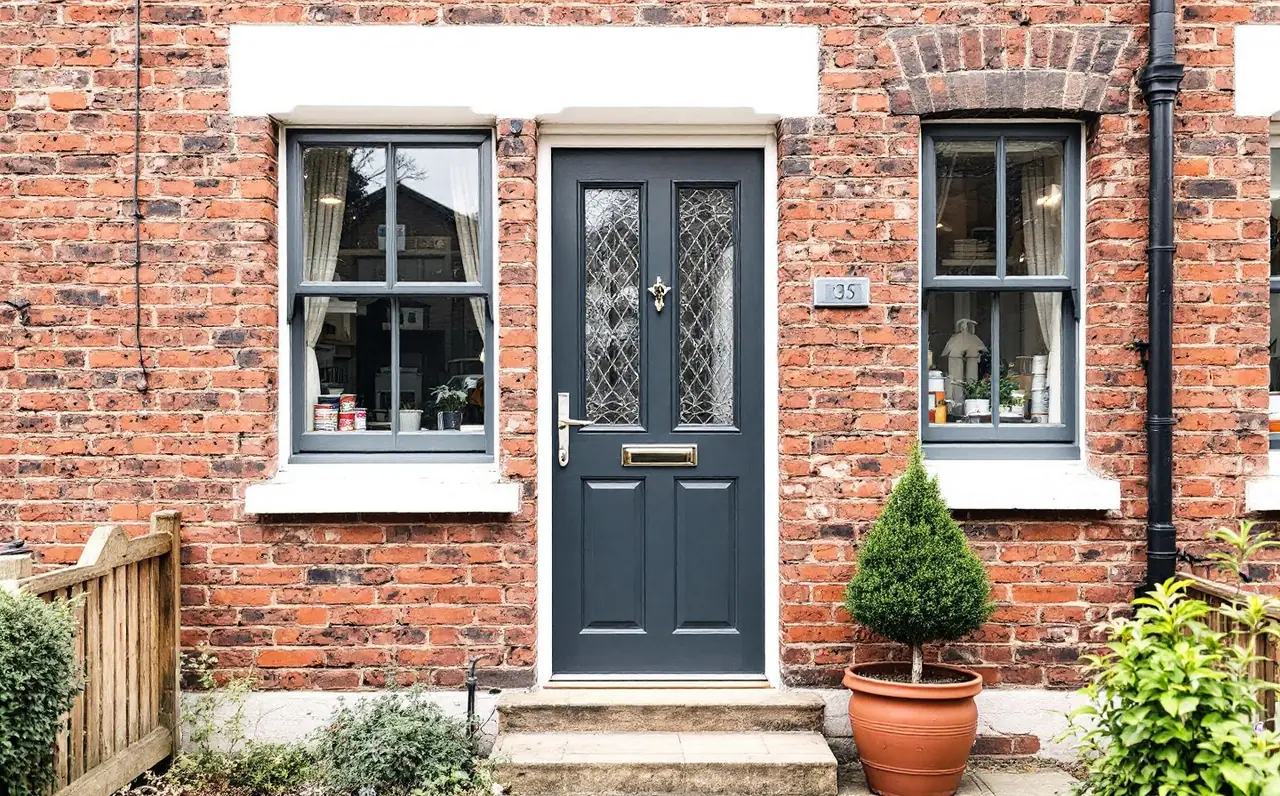
RAL 7016 anthracite grey on windows and doors
Why RAL 7016 anthracite grey ended up on so many window frames and doors, how it behaves in daylight, what it pairs with and when a neighbouring grey suits better.
Read the note