Screens, print and codes
How to read and use a RAL fan deck
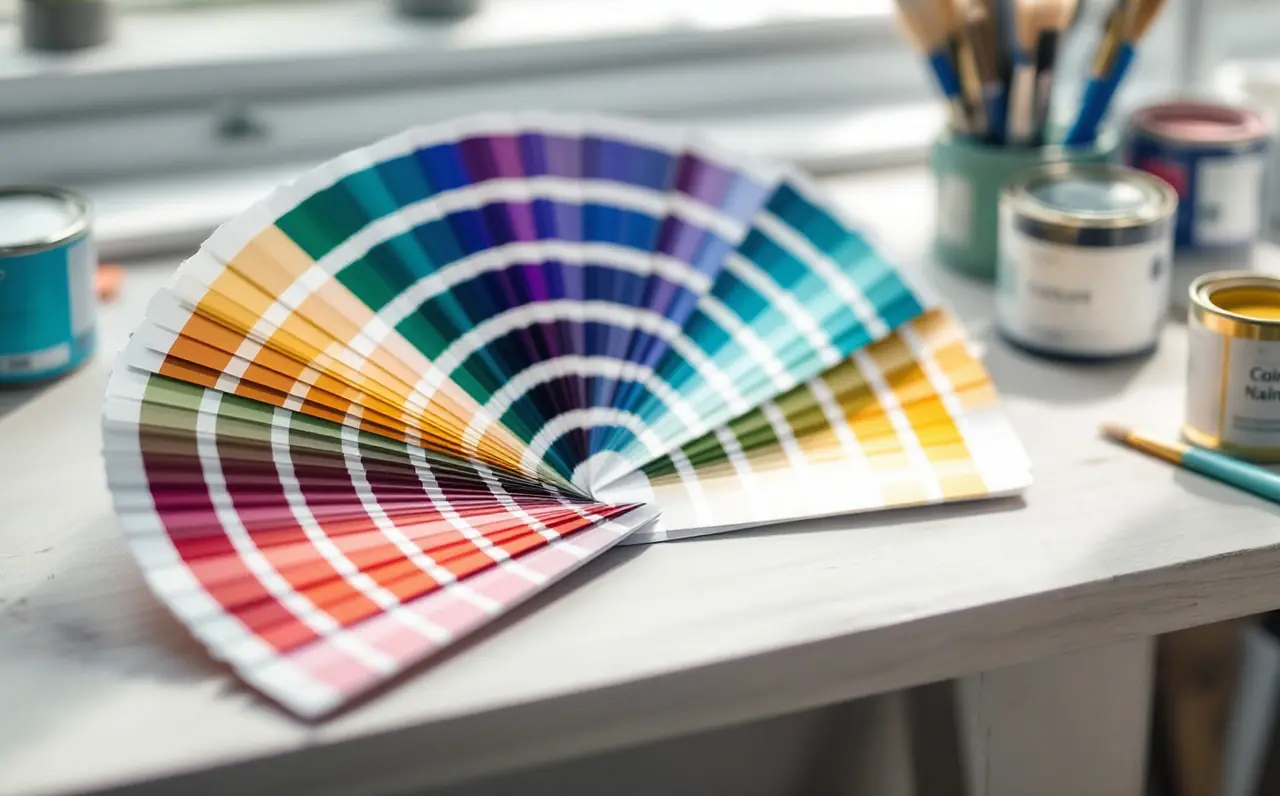
What the strips in a RAL Classic fan deck tell you, how to hold one against a wall or a part, and how to store it so the colours stay worth trusting.
Read the noteChart / 1000 series / RAL 1015 Light ivory
A very light, muted orange on screen. First published on this chart 10 November 2012.
This swatch is a screen approximation of the colour. Check a physical RAL fan deck or a painted sample of the actual product before you order or match anything.
| Hex (sRGB) | #E6D2B5 |
|---|---|
| RGB | 230, 210, 181 |
| HSL | 36°, 49%, 81% |
| CMYK (naive) | 0, 9, 21, 10 |
| CIE Lab (from sRGB) | 85.1, 2.4, 16.9 |
| Relative luminance | 66.3% |
| Text contrast | white text 1.5:1, black text 14.3:1 |
Values are derived from the approximate hex above. CMYK is a simple conversion, not a print recipe: printers convert through their own profiles. Luminance is a screen figure, not a measured light reflectance value (LRV) from a paint data sheet.
Paler than RAL 1014 ivory, light ivory is a gentle, warm cream with a faint pink beige tone. It falls between RAL 1013 oyster white and the yellower ivory, and across a large area it reads as a warm off white.
In Germany it is widely known as the traditional taxi colour, and it also suits interior walls, cabinets and window frames. For vehicles, ask the supplier about the car maker's own paint code as well, since automotive mixes differ from general ones.
Quote the number, not just the name: say "RAL Classic 1015" and add the gloss level, the product type (wall paint, metal paint, powder, aerosol) and the surface. The same number mixed by two makers, or in two gloss levels, can look slightly different, so keep a whole job in one batch and look at a sample in daylight first. The paint counter guide covers the questions to ask.
What the strips in a RAL Classic fan deck tell you, how to hold one against a wall or a part, and how to store it so the colours stay worth trusting.
Read the note