
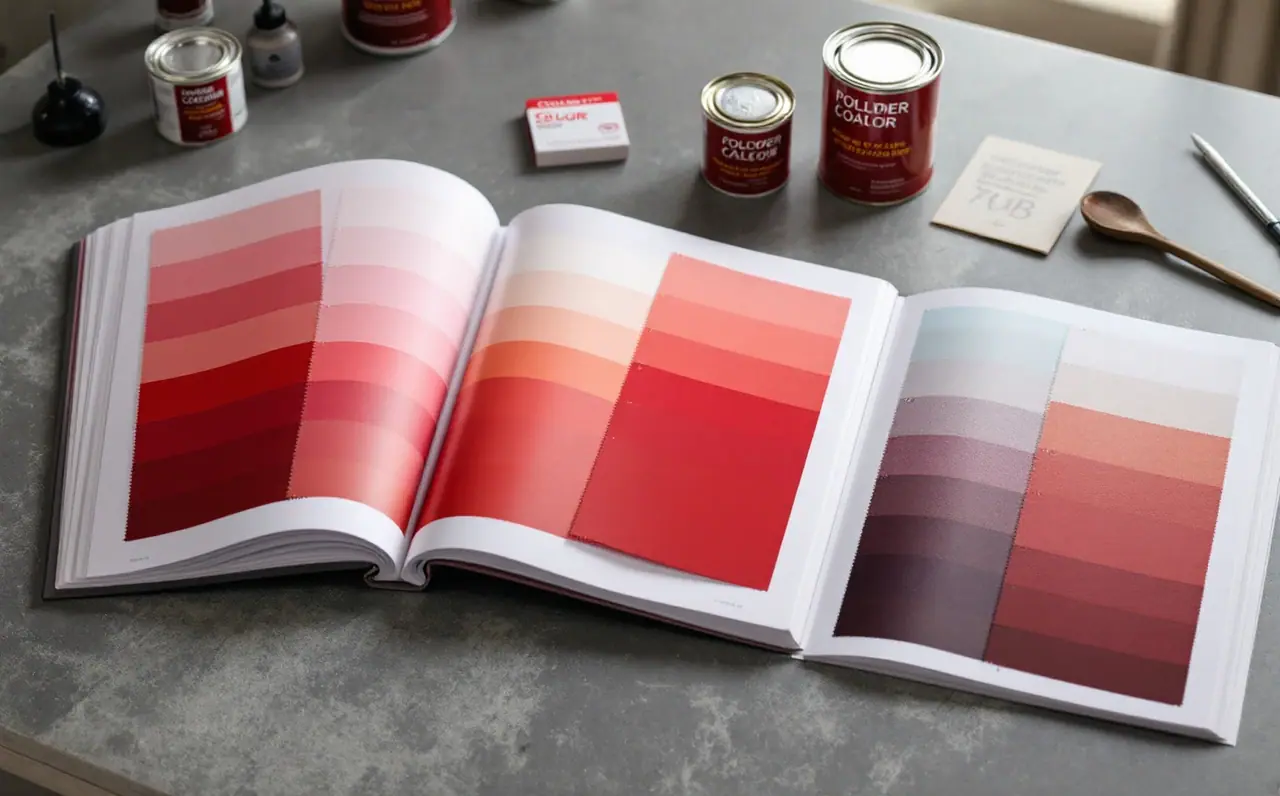
RAL, NCS and Pantone: which colour system to use when
RAL, NCS and Pantone describe colour in different ways for different trades. Here is what each one is good at and why conversions are only ever nearest matches.
Read the noteChart / 3000 series / RAL 3020 Traffic red
A dark, strong red on screen. First published on this chart 3 February 2013.
This swatch is a screen approximation of the colour. Check a physical RAL fan deck or a painted sample of the actual product before you order or match anything.
| Hex (sRGB) | #C1121C |
|---|---|
| RGB | 193, 18, 28 |
| HSL | 357°, 83%, 41% |
| CMYK (naive) | 0, 91, 85, 24 |
| CIE Lab (from sRGB) | 41, 63.3, 43.7 |
| Relative luminance | 11.9% |
| Text contrast | white text 6.2:1, black text 3.4:1 |
Values are derived from the approximate hex above. CMYK is a simple conversion, not a print recipe: printers convert through their own profiles. Luminance is a screen figure, not a measured light reflectance value (LRV) from a paint data sheet.
Clear and saturated with a touch of orange, traffic red is brighter than both RAL 3000 flame red and RAL 3001 signal red. It is designed to stand out sharply against almost any background.
It is associated with Deutsche Bahn trains and is widely used for warning signs, road equipment, machinery and doors. Bright reds cover poorly, so use a grey or red tinted primer and a gloss finish for the best colour hold.
Quote the number, not just the name: say "RAL Classic 3020" and add the gloss level, the product type (wall paint, metal paint, powder, aerosol) and the surface. The same number mixed by two makers, or in two gloss levels, can look slightly different, so keep a whole job in one batch and look at a sample in daylight first. The paint counter guide covers the questions to ask.
RAL, NCS and Pantone describe colour in different ways for different trades. Here is what each one is good at and why conversions are only ever nearest matches.
Read the note